


SFDA Approves Registration of “Tzield” for Delaying Type 1 Diabetes

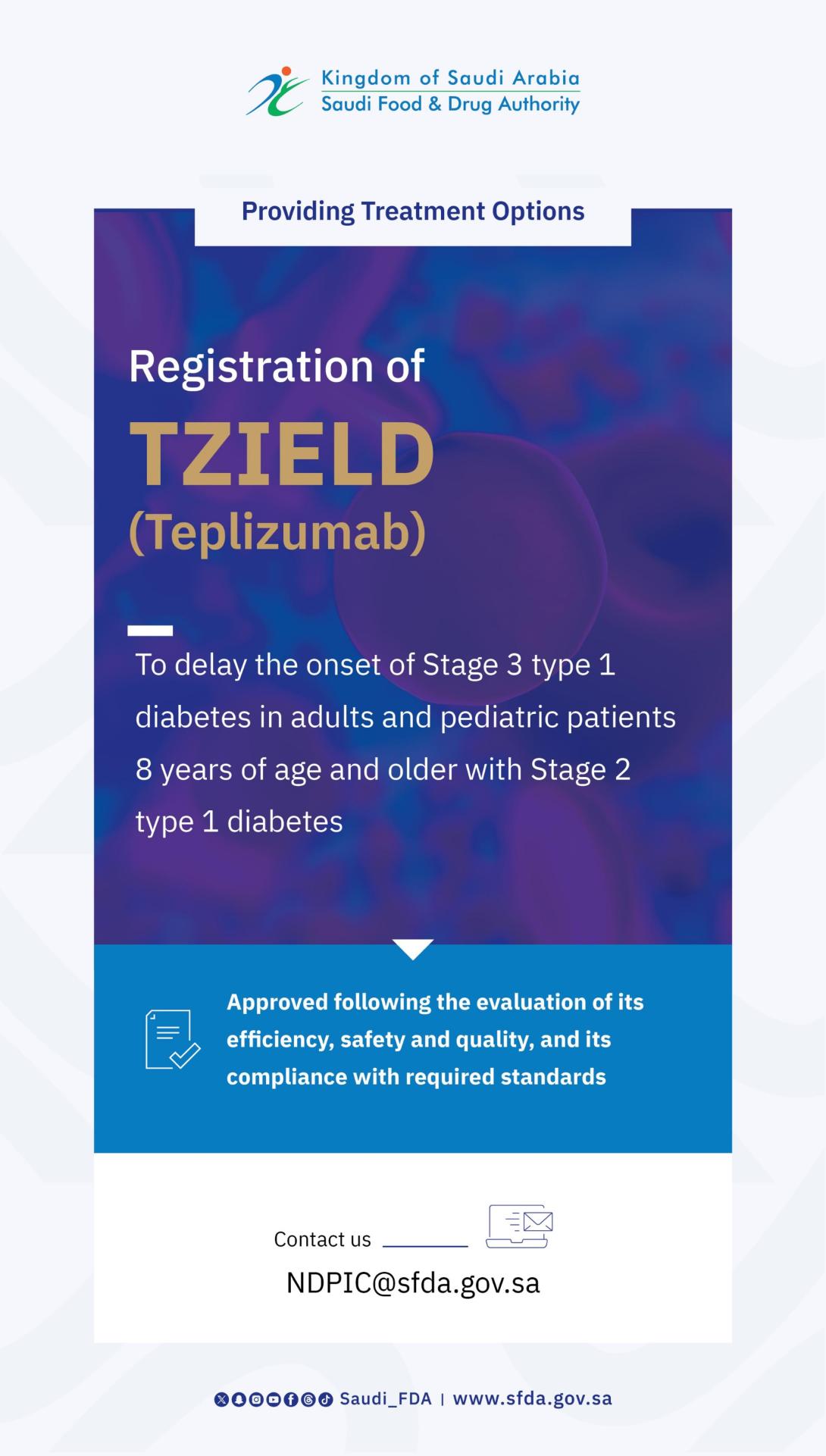
The Saudi Food and Drug Authority (SFDA) has approved the registration of Tzield (teplizumab) to delay the onset of Stage 3 type 1 diabetes in adults and pediatric patients 8 years of age and older with Stage 2 type 1 diabetes (T1D).
First Treatment to Delay Type 1 Diabetes
Tzield is the first drug of its kind to be approved for this medical indication. It is a monoclonal antibody that targets CD3, a cell surface antigen presents on T lymphocytes. By binding to these cells, the product helps to inhibit their activity or decrease their number, which aids in restoring immune balance and delaying disease progression.
The product is administered to patients with confirmed Stage 2 T1D, characterized by the presence of at least two positive pancreatic islet autoantibodies and abnormal blood glucose levels, in the absence of type 2 diabetes. It is given as a daily intravenous infusion for 14 consecutive days and is not repeated thereafter.
Positive Outcomes in Delaying Disease Progression
The SFDA approved Tzield following a comprehensive assessment of the totality of evidence, including its efficacy, safety, and quality, in line with the applicable regulatory standards.
Clinical trial data demonstrated that Tzield significantly delayed the onset of stage 3 type 1 diabetes compared to placebo in high-risk individuals with positive autoantibodies who had not yet developed symptoms. Results showed that the median time to diagnosis was extended by 24.6 months in the Tzield group compared to the placebo group.
Most Common Adverse Events
The most frequently reported adverse events in clinical studies were lymphopenia, rash, leukopenia, and headache. The drug also carries warnings and precautions related to risks of cytokine release, infections, lymphopenia, and hypersensitivity reactions.
A Step Towards a Sustainable Healthcare System
This approval reflects the SFDA’s commitment to expanding therapeutic options, fostering an environment that encourages research and innovation, and providing patients with novel treatments that improve quality of life. It also supports the advancement of a sustainable healthcare system in line with the Health Sector Transformation Program, one of the key initiatives of Saudi Vision 2030.


Comments and Suggestions
For any inquiries or comments about the government services, please fill in the required information.